While the national conversation about AI and employment often centers on job replacement, a more profound transformation is happening within the tech and creative industries themselves. Beyond the immediate market squeeze, a new generation of AI tools is fundamentally rewiring *how* work gets done, shifting the most valuable human skills from manual execution to high-level direction, intuitive design, and sophisticated security oversight. The future of a vast number of technical roles may depend less on one’s ability to write code and more on their ability to have a conversation.
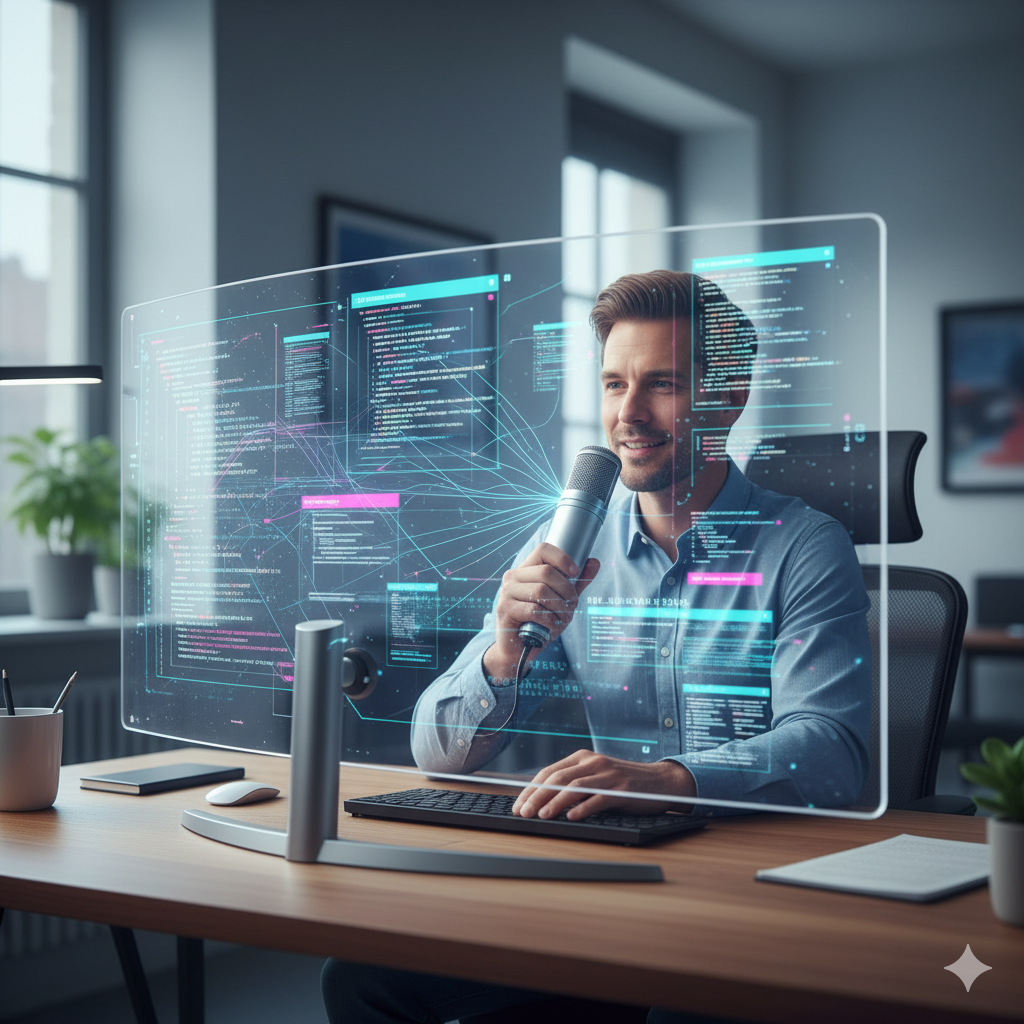
This emerging paradigm is perhaps best captured by the concept of “vibe coding,” a term highlighted at a Tracy Developer Meetup scheduled for this evening, September 26, 2025. The event’s speaker, yüda CEO Daisy Mayorga-Fuentes, describes it as a method where developers use simple, everyday language to describe a desired outcome, and an AI agent handles the complex tasks of writing, testing, and debugging the underlying code. This approach transforms the developer’s role from a line-by-line builder to a creative director, whose primary skill is communicating a clear vision to an AI collaborator.
The Human-Centric Future of Design
This shift toward conversational direction is mirrored in the world of user experience (UX) design. An upcoming “AI+UX” lecture in New York, also happening tonight, focuses on how AI is augmenting the creative process by automating data analysis, generating design variations, and personalizing user interfaces in real time. The event highlights a future where UX designers are freed from repetitive tasks to focus on “higher-level strategic thinking.” In this new model, the designer’s core value lies in their human intuition and their ability to guide AI to create experiences that are not just functional, but also engaging and responsible.
This human-in-the-loop approach is becoming central to the industry. As we covered in our article yesterday, “The Next Tech Frontier,” Microsoft is already diversifying the AI models within its Copilot assistant to give users more choice in their creative partner. By allowing users to switch between models from OpenAI and Anthropic, Microsoft is acknowledging that the “vibe” and output of different AIs are distinct, and the user’s ability to choose the right creative partner is becoming a skill in itself.
New Tools, New Threats
However, this new world of AI agents and “non-human identities” performing tasks also introduces a new and complex threat landscape. As development becomes more automated, the need for advanced security oversight grows exponentially. Recognizing this, industry leaders are gathering for an AI Cybersecurity Salon in Mountain View this week. The forum’s agenda is focused on AI-driven threat detection and managing the risks associated with a workforce increasingly composed of autonomous AI agents. The demand for cybersecurity professionals who understand how to secure these new, fluid development environments is set to explode, creating another high-value role centered on human oversight rather than manual production.
For HR leaders and professionals navigating a turbulent job market, this evolution presents both a challenge and an opportunity. While the latest Indeed labor market report shows a “squeeze on new entrants” in traditional junior roles, these emerging, AI-centric fields represent the next frontier of hiring. The most resilient and valuable employees of the near future will be those who can artfully direct, creatively design with, and securely manage artificial intelligence.