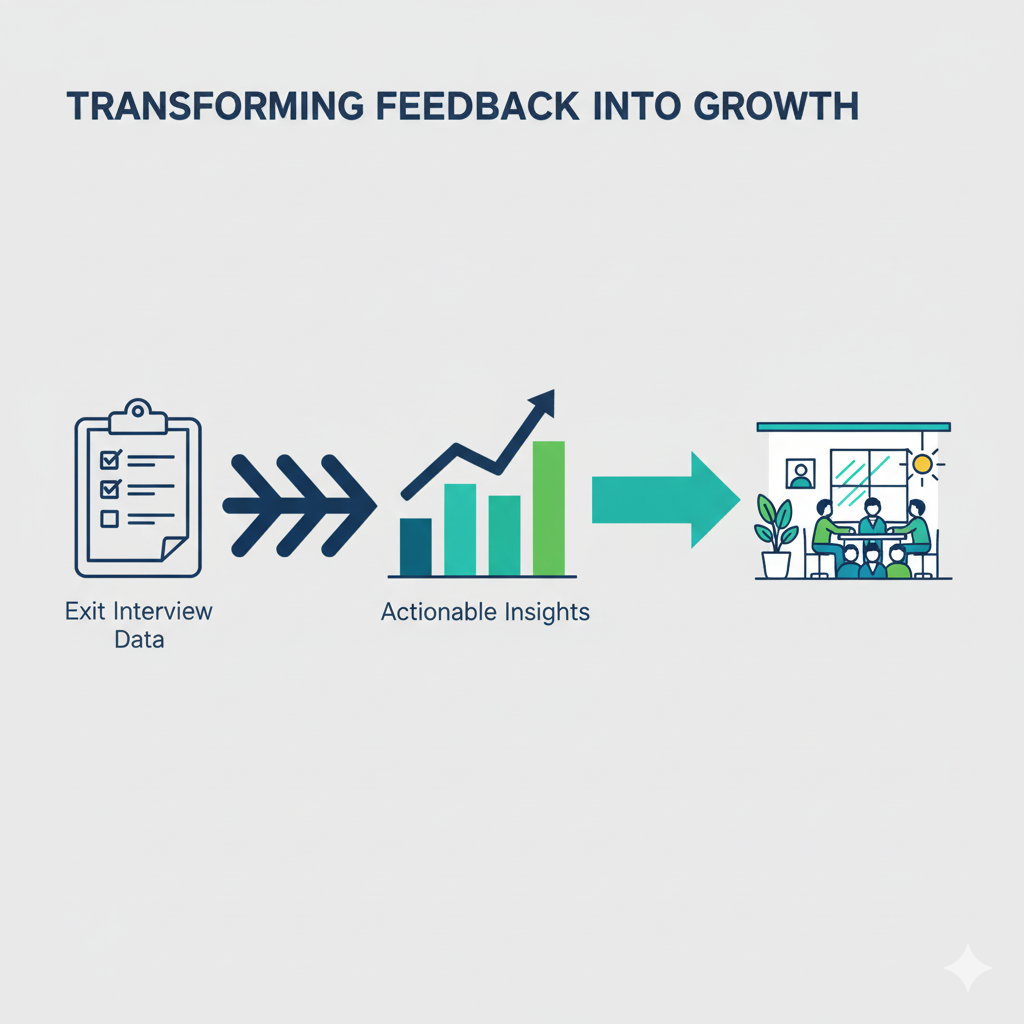
The exit interview. It’s one of the most potentially valuable yet consistently underutilized tools in an HR leader’s arsenal. Too often, it’s a “check-the-box” exercise where feedback is collected, filed away, and never seen again.
But what if you treated your exit interview data with the same seriousness as your quarterly sales data? When done right, the feedback from departing employees is a goldmine of honest, unfiltered insights that can help you fix hidden problems and build a stronger organization. Here’s how to turn that data into meaningful action.
- Ask Better Questions
Why it’s important: A great analysis starts with great data. As recognized by HR platforms like Qualtrics and Culture Amp, you must move beyond the generic “Why are you leaving?” to get truly useful feedback.- Focus on specifics. Ask about the employee’s relationship with their direct manager, their opportunities for growth, and their view on the company culture.
- Ask about the “pull” factors, not just the “push.” Instead of just asking what pushed them away, ask what pulled them toward their new opportunity. This can reveal gaps in your own compensation, benefits, or career pathing.
- Use a mix of methods. A confidential, written survey can yield more candid feedback on sensitive topics than a face-to-face interview alone.
- Systematize the Feedback
Why it’s important: Individual anecdotes are interesting, but trends are powerful. You need a system to track the data over time.- Tag and categorize. As feedback comes in, tag it with key themes: “Management,” “Compensation,” “Work-Life Balance,” “Career Growth,” “Team Dynamics.”
- Use a simple spreadsheet or dashboard. Track the frequency of these themes month over month and quarter over quarter. This allows you to spot patterns before they become crises. For example, if you see a spike in “Management” as the reason for leaving in a specific department, you know you have a problem to investigate.
- Identify Actionable Insights
Why it’s important: Data is useless without insights. At the end of each quarter, analyze your findings.- Look for trends, not outliers. One person’s complaint might be an anecdote. Five people from the same team leaving for the same reason is a trend that demands action.
- Connect exit data to other HR metrics. Are your high-performers leaving? Is a specific department seeing higher turnover? Cross-referencing exit feedback with performance and retention data tells a much richer story.
- Close the Loop and Drive Change
Why it’s important: This is the most important step. You must present your findings to leadership in a way that drives action.- Create a concise, quarterly “State of Retention” report. Present the top 2-3 themes from your exit data with clear charts and anonymous, illustrative quotes.
- Recommend concrete actions. Don’t just present problems; propose solutions. If feedback points to a lack of career growth, recommend implementing a new mentorship program or a more transparent career pathing framework.
- Follow up. As one Harvard Business Review article on the topic stresses, “Without a structured process for discussion and action, nothing will change.” Schedule a follow-up meeting to track progress on the actions agreed upon by leadership.
Stop treating exit interviews as a final goodbye. As leading experts at SHRM often advise, start treating them as the beginning of your next great improvement.